



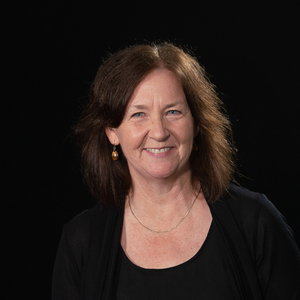

Dr. Denise M. Driscoll
- SPN Mentor
Dr. Driscoll is currently the Director of Access and Societal Impacts for an NSF Engineering Research Center housed by the Davidson School of Chemical Engineering at Purdue University called CISTAR, which stand for Center for Innovative and Strategic Transformation of Alkane Resources. She is also an Adjunct Assistant Professor of Psychology at Purdue.
Dr. Driscoll's initial background was in experimental social psychology with an emphasis on social cognition and forming person impressions. As an Assistant Professor of Psychological Sciences at Purdue (1991 to 1999), she taught and conducted research on person impressions, attitude accessibility, persuasion, stereotyping, prejudice, verbal and nonverbal communication, sexual harassment, and intergroup relations.
After a hiatus as a visiting scholar at the University of Queensland to study intercultural initiatives in Australia, Dr. Driscoll returned to Purdue as the Diversity Resource Specialist for the Vice President for Human Relations. From 2000-2007, she 1) Advised colleges, schools, and units about diversity issues and programs, 2) Played a major role in two assessments of Purdue's diversity and work-life climate, 3) Wrote, assessed, and consulted on diversity-related National Science Foundation grants, and 4) Developed, facilitated, and assessed diversity training workshops and programs across the Purdue campus as well as in the local community.
In 2008, she combined her experiences as an academic (with its focus on research and theory) with her experiences as an administrator (with its focus on applying research and theory to effect positive change in the workplace) and founded Diversity Competency LLC to help companies improve their diversity competency.
Dr. Driscoll re-joined the faculty at Purdue as a Continuous Lecturer in The Krannert School of Management from 2015 to 2019. She studied: (1) The types of managerial communication practices that create, and sustain, highly effective international teams and (2) The types of educational and training methods that increase the global dexterity of managers. Dr. Driscoll taught several courses to MBA students, including Managerial Communication Skills, Intercultural Communication and Management, Mentoring and Socialization, and Managerial Business Writing.
In August of 2019, Dr. Driscoll joined the Center for Innovative and Strategic Transformation of Alkane Resources (CISTAR) as part of the Davidson School of Chemical Engineering at Purdue. CISTAR is a center with four other universities--Northwestern University, University of New Mexico, University of Notre Dame, and University of Texas at Austin as well as many corporate partners company. Our goal is to create a center where learners, researchers, and teachers are ready to participate and lead in a global energy economy.
Primary Interests:
- Applied Social Psychology
- Attitudes and Beliefs
- Communication, Language
- Culture and Ethnicity
- Gender Psychology
- Intergroup Relations
- Nonverbal Behavior
- Person Perception
- Persuasion, Social Influence
- Prejudice and Stereotyping
- Research Methods, Assessment
- Social Cognition
Note from the Network: The holder of this profile has certified having all necessary rights, licenses, and authorization to post the files listed below. Visitors are welcome to copy or use any files for noncommercial or journalistic purposes provided they credit the profile holder and cite this page as the source.
Image Gallery
Video Gallery
Diversity and Inclusion
Journal Articles:
- Craig, T. Y., Kelly, J. R., & Driscoll, D. M. (2001). Participant perceptions of potential employers who vary in the likelihood to sexually harass. Sex Roles: A Journal of Research, 44, 389-400.
- Driscoll, D. M., & Gingrich, B. E. (1997). Effect of single-trait, social stereotype, and multi-trait expectancies on person impressions. Journal of Social Behavior and Personality, 12, 397-416.
- Driscoll, D. M., Hamilton, D. L., & Sorrentino, R. M. (1991). Uncertainty orientation and recall of person-descriptive information. Personality and Social Psychology Bulletin, 17(5), 494–500.
- Driscoll, D. M., Kelly, J. R., & Henderson, W. L. (1998). Can perceivers identify likelihood to sexually harass? Sex Roles, 38, 557-588.
- Fazio, R. H., Blascovich, J., & Driscoll, D. M. (1992). On the functional value of attitudes: The influence of accessible attitudes upon the ease and quality of decision-making. Personality and Social Psychology Bulletin, 18, 388-401.
- Hamilton, D. L., Driscoll, D. M., & Worth, L. T. (1989). Cognitive organization of impressions: Effects of incongruency in complex representations. Journal of Personality and Social Psychology, 57, 925-939.
- Ho, C. P., & Driscoll, D. M. (1998). Prejudiced responses and affect. British Journal of Social Psychology, 37, 275-285.
- Ho, C. P., Driscoll, D. M., & Loosbrock, D. L. (1998). Great expectations: The negative consequences of falling short. Journal of Applied Social Psychology, 28, 1743-1759.
- Kelly, J. R., Murphy, J. D., Craig, T. Y., & Driscoll, D. M. (2005). The effects of nonverbal behavior associated with sexual harassment proclivity on women’s performance. Sex Roles: A Journal of Research, 53, 689-701.
- Murphy, J. D., Driscoll, D. M., & Kelly, J. R. (1999). Difference in the nonverbal behavior of men who vary in the likelihood to sexually harass. Journal of Social Behavior and Personality, 14, 113-128.
- Pendry, L. F., & Driscoll, D. M. (2011). Five guiding principles to help improve diversity training assessment. Training and Management Development Methods, 25(2).
- Pendry, L. F., Driscoll, D. M., & Field, S. C. T. (2007). Diversity training: Putting theory into practice. Journal of Occupational and Organizational Psychology, 80(1), 27-50.
- Sherman, S. J., Mackie, D. M., & Driscoll, D. M. (1990). Priming and the differential use of dimensions in evaluation. Personality and Social Psychology Bulletin, 16(3), 405–418.
Other Publications:
- Driscoll, D. (2021). CISTAR summer program increases diversity and inclusion in engineering. CISTAR Has a summer program like no other--CISTAR, NSBE SEEK partner to increase diversity and inclusion in STEM fields. Purdue University ChE Newsletter, Spring 2021. Charles D. Davidson School of Chemical Engineering.
- Driscoll, D., & Drummond Oakes, M. (2021). Preparing STEM graduate student to be effective and inclusive virtual mentors. Chronicle of Mentoring and Coaching, 5, Special Issue 14.
- Driscoll, D., & Everett, K. (2022, August). The value of assessing, reporting, and discussing culture of inclusion. Paper presented at 2022 ASEE Annual Conference & Exposition, Minneapolis, MN.
- Driscoll, D. M. (2022, December). A survey instrument to explore mentor-mentee perceptions of their mentoring experience. Chronicle of Mentoring and Coaching, 6, Special Issue 15.
- Driscoll, D. M. (2016 release). “Diversity, Prejudice, & Stereotypes.” Sage Videos in Practice, Sage Publishers (https://us.sagepub.com/en-us/nam/psychology-video).
- Driscoll, D. M. (2014). Stereotype threat. An online module for a certificate program for faculty and administrators at colleges/schools of veterinary medicine. Center of Excellence for Diversity and Inclusion in Veterinary Medicine.
- Driscoll, D. M. (2004). Mentoring and diversity: A handbook for faculty mentoring LSAMP Indiana students in science, technology, engineering and mathematics fields.
- Driscoll, D. M., & Drummond Oakes, M. (2021). Creating a diverse next generation of technically- and community-minded STEM professionals. Paper presented at 2021 ASEE Virtual Annual Conference Content Access, Virtual Conference. 10.18260/1-2–36866
- Driscoll, D. M., & Koch, A. K. (2003, May). National Science Foundation Awards Indiana a Five-Year Louise Stokes Alliance for Minority Participation (LSAMP) Grant: How Academic Advisors at Participating Universities Can Be a Part of The Effort. Indiana Academic Advising Network Newsletter, Advising Update.
- Driscoll, D. M., Kokini, K., Katehi, L. P. B., Wright, J. R., & Percifield, C. P. (2004). A new paradigm for diversity in engineering. Proceedings of the 2003 American Society for Engineering Education Annual Conference & Exposition.
- Driscoll, D. M., Zawojewski, J. S., & Stahura, J. (2008). Learning from engineering students’ reactions to small group laboratories. In J. S. Zawojewski, H. Diefes-Dux, and K. Bowman (Eds.), Models and modeling in Engineering Education: Designing experiences for all students. Rotterdam, the Netherlands: Sense Publishers.
- Fazio, R. H., Blascovich, J., & Driscoll, D. M. (2008). On the functional value of attitudes: The influence of accessible attitudes on the ease and duality of decision making (pp. 283-298). In R. H. Fazio, & R. E. Petty (Eds.), Attitudes: Their structure, function, and consequences. New York: Psychology Press.
- Hamilton, D. L., Driscoll, D. M., & Stroessner, S. J. (1991). Stereotypes and prejudice. In R. Dulbecco (Ed.), Encyclopedia of Human Biology (Vol. 7, pp. 233-241). Orlando, FL: Academic Press.
- Hamilton, D. L., Stroessner, S. J., & Driscoll, D. M. (1994). Social cognition and the study of stereotyping. In P. G. Devine, D. L. Hamilton, & T. M. Ostrom (Eds.), Social cognition: Contributions to classic issues in social psychology. New York: Springer-Verlag.
Courses Taught:
- Intercultural Communication and Management, MGMT 69000
- Krannert Leadership Development Program, MGMT 390
- Managerial Business Writing, MGMT 69000
- Managerial Communication Skills, MGMT 69200
- Mentoring and Socialization, OBHR 560
Dr. Denise M. Driscoll
Hall for Discovery and Learning Research (DLR)
207 S. Martin Jischke Drive
Purdue University
West Lafayette, Indiana 47907
United States of America
- Phone: (765) 494-4835
- Fax: (765) 494-4900
- Skype Name: Denise.M.Driscoll
